















Constitutional amendment debate: Legality versus legitimacy in Zimbabwe’s proposed changes
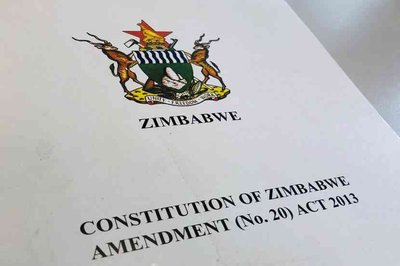
A constitutional law expert argues that the real issue in Zimbabwe’s proposed amendment is not whether Parliament has the power to amend the Constitution, but whether the process bypasses safeguards meant to prevent self-interested changes to tenure and authority.
Constitutional amendment debate: Legality versus legitimacy in Zimbabwe’s proposed changes
Source: www.cite.org.zw
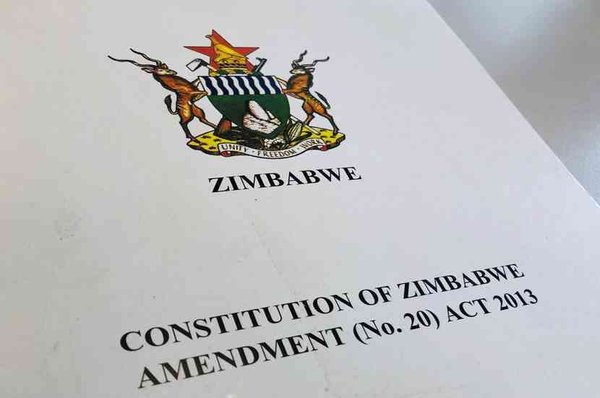
Public discussion around Zimbabwe’s proposed constitutional amendment has drifted into deliberate misdirection, according to Dr Godfrey Gandawa. The narrative has been reduced to a technical argument about sections 117, 131, and 328 of the Constitution, as if the only question is whether Parliament possesses amendment powers. No one is disputing those powers, and no one is contesting section 110. The core concern, Dr Gandawa argues, is not the existence of amendment powers but the context in which those powers are being exercised, the interests of those exercising them, and the constitutional safeguards being bypassed.
The Constitution of Zimbabwe requires a referendum for certain categories of amendments, particularly those affecting foundational democratic structures. This safeguard exists for a simple reason: office-holders should not unilaterally change the rules that govern their own tenure or authority. The referendum is not a political preference but a constitutional design feature. It ensures that when amendments affect the duration, structure, or limits of political power, the final decision rests with the public—the only actor that does not stand to benefit personally.
Dr Gandawa points to a semantic strategy at play: the current attempt to distinguish “elongation” from “term limits” avoids the referendum safeguard. In constitutional interpretation, effect matters more than wording. Extending the duration of office has the same practical consequence as altering term limits—it prolongs the time incumbents remain in power. Avoiding the referendum does not resolve the legitimacy problem, he writes; it amplifies it.
The conflict of interest problem lies at the heart of the matter. Members of Parliament are being asked to vote on a measure that directly benefits them, creating a direct conflict of interest because MPs stand to gain additional years in office. Cabinet members, who are also MPs, recommended the Bill and stand to benefit from its passage. The President is expected to assent to a law that prolongs his own time in office. Comparative constitutional practice treats such scenarios as requiring heightened scrutiny, and the referendum exists precisely to remove this conflict of interest by giving the final decision to the public.
In constitutional theory, legality and legitimacy are not the same. Parliament may follow the procedural steps for passing an amendment, and the amendment may satisfy the textual requirements of sections 117, 131, and 328. On a narrow reading, the process may appear procedurally compliant. But the referendum safeguard exists to prevent self-interested amendments. Extending the tenure of sitting office-holders without public consent raises concerns about constitutional ethics. A constitutional amendment that benefits its authors may be legal in form but illegitimate in substance.
Dr Gandawa concludes that a constitutional democracy requires both legality and legitimacy. Those who present themselves as architects, interpreters, or strategists of the amendment understand this distinction perfectly well, yet they continue to package the proposal as a purely procedural exercise. The debate, he insists, must return to the principles of constitutionalism, institutional integrity, and public trust.
What's Your Reaction?
 Like
0
Like
0
 Dislike
0
Dislike
0
 Love
0
Love
0
 Funny
0
Funny
0
 Angry
0
Angry
0
 Sad
0
Sad
0
 Wow
0
Wow
0