










CAB3 term extension clauses unconstitutional without referendum: Law Society
It raises alarm over judicial, electoral independence Source: CAB3 term extension clauses unconstitutional without referendum: Law Society – Zimbabwe News Now The Parliament of Zimbabwe HARARE – The Law Society of Zimbabwe has warned par...
CAB3 term extension clauses unconstitutional without referendum: Law Society
Source: www.zimbabwesituation.com
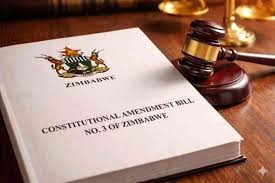
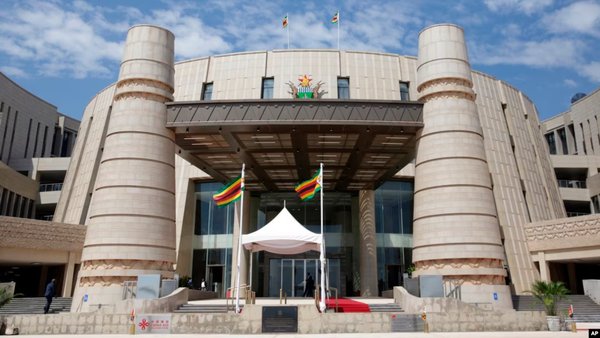
It raises alarm over judicial, electoral independence Source: CAB3 term extension clauses unconstitutional without referendum: Law Society – Zimbabwe News Now The Parliament of Zimbabwe HARARE – The Law Society of Zimbabwe has warned parliament that key provisions of Constitutional Amendment (No. 3) Bill are unconstitutional, saying clauses seeking to extend presidential and parliamentary terms to seven years cannot be applied to incumbents without first holding a referendum. In formal submissions dated May 15, 2026, the LSZ said clauses 4, 9 and 10 of CAB3 – which propose extending terms from five to seven years – effectively seek to override section 328(7) of the constitution, which bars term-limit amendments from applying to sitting officeholders. “If clauses 4, 9 and 10 of CAB3 are adopted without a referendum, their adoption will be inconsistent with the constitution and international law,” the LSZ said. The LSZ said the drafters of the clauses appeared to have deliberately engineered a workaround, inserting a “notwithstanding” provision into clause 4(2a) that purports to negate the ordinary operation of section 328(7). “The effect of this proposed amendment is to purport to circumvent, override or amend s 328(7) by the insertion of a ‘notwithstanding’ provision that negates the ordinary application of s 328(7),” the LSZ said.
Because section 328(9) requires that section 328 itself be amended only through a referendum, the LSZ concluded that passing the clauses without a public vote would also breach Zimbabwe’s obligations under the International Covenant on Civil and Political Rights and regional instruments including the African Charter on Democracy, Elections and Governance. On the proposed transfer of voter registration from the Zimbabwe Electoral Commission to the Registrar-General – a direct presidential appointee – the LSZ said the move would hand executive control over a function deliberately designed to be independent of the executive. “The proposed amendments in CAB3 increase executive control over a process that has otherwise been designed with a deliberate degree of independence from executive influence,” it said, concluding that the transfer “would be inconsistent with the right to free, fair and regular elections in s 67 of the constitution and with art 25 of the ICCPR and art 17 of the ACDEG.” The Society raised similar concerns about the proposed Zimbabwe Electoral Delimitation Commission, which would take over boundary delimitation from ZEC but whose members would be appointed directly by the President. “The ZEDC lacks adequate institutional independence because of the direct appointment of its members by the president,” the LSZ said, adding that the violation “would be mitigated by introducing a constitutional guarantee of independence and amending the appointment provisions to incorporate the involvement of the JSC or another suitable body.” On the proposal to allow the president to appoint 10 additional senators – bringing the Senate from 80 to 90 members – the LSZ said the clause was incompatible with the constitutional principle of representative government. “A presidential power to unilaterally appoint an additional 10 senators out of a total of 90 can materially distort the proportional outcomes achieved through the popular voting process,” it said. The Society was equally critical of clause 15, which would give the president power to appoint all judges after mere consultation with the Judicial Service Commission, replacing a process under which the JSC nominates High Court judges following public interviews. “The proposed amendment would structurally undermine the independence of judges by reducing the role of the JSC in the appointment of judges to a merely advisory function and vesting the exclusive power of appointment in the President,” the LSZ said.
On the Prosecutor-General, the LSZ said removing the requirement that the president act on JSC advice in making the appointment “directly undermines the independence” of the office, which is constitutionally required to be “independent and not subject to the direction or control of anyone.” The LSZ also objected to the repeal of section 281(2), which prohibits traditional leaders from engaging in partisan politics. “Key aspects of the role and responsibilities of traditional leaders, such as resolving disputes and exercising authority over communal lands, are fundamentally incompatible with their acting in a partisan manner or furthering the interests of a particular political party,” it said. The LSZ said eight other CAB3 provisions, including the shift from direct to parliamentary election of the president and the dissolution of the Zimbabwe Gender Commission, did not raise substantive constitutional concerns, though it warned the gender commission’s abolition risked “deprioritising or under-resourcing of gender-related human rights matters.” The controversial bill is set to be debated in parliament later this week before a vote. The post CAB3 term extension clauses unconstitutional without referendum: Law Society appeared first on Zimbabwe Situation .
What's Your Reaction?
 Like
0
Like
0
 Dislike
0
Dislike
0
 Love
0
Love
0
 Funny
0
Funny
0
 Angry
0
Angry
0
 Sad
0
Sad
0
 Wow
0
Wow
0