









Fuel relief on the horizon . . . Govt moves to ease pain at the pump
Source: Fuel relief on the horizon . . . Govt moves to ease pain at the pump – herald Zimpapers Reporters CONSUMERS could soon get relief from rising fuel prices after President Mnangagwa established a high-level inter-ministerial commit...

Fuel relief on the horizon . . . Govt moves to ease pain at the pump
Source: www.zimbabwesituation.com
Source: Fuel relief on the horizon . . . Govt moves to ease pain at the pump – herald Zimpapers Reporters CONSUMERS could soon get relief from rising fuel prices after President Mnangagwa established a high-level inter-ministerial committee to craft urgent measures to cushion consumers from soaring global oil prices. The committee, chaired by Chief Secretary in the Office of the President and Cabinet Dr Martin Rushwaya, was set up on Friday shortly after the President received a report on the impact of recent fuel price increases on households and businesses.
Deputy Chief Secretary (Presidential Communications) Mr George Charamba said the move followed public concerns raised over fuel price hikes. Writing on X yesterday, Mr Charamba said the Government acted swiftly after the issue was brought to the President’s attention. “Following our engagement here, your request to Government in respect of fuel price pressures were duly communicated to the President, Dr ED Mnangagwa,” he said. “This was on Thursday afternoon. He wasted no time and directed Finance Minister Mthuli Ncube to look into the matter expeditiously for some relief.
Under the aegis of the Chief Secretary, an inter-ministerial team was set up to address the matter. This was yesterday (Friday). It has since made its recommendations, which Government is now considering.” Senior Government officials were yesterday locked in meetings to finalise a package of interventions aimed at stabilising fuel prices and easing broader cost-of-living pressures. The Sunday Mail has gathered that measures under consideration include reviewing fuel taxes and levies, and increasing ethanol blending.
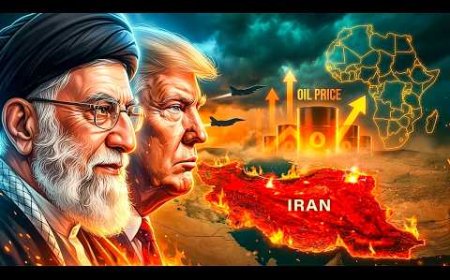
In the medium term, there is also an effort to fast-track Zimbabwe’s transition to electric vehicles (EVs) as part of efforts to reduce reliance on imported fuel. In recent weeks, Zimbabwe has borne the brunt of surging crude oil prices following the United States and Israel’s attack on Iran, which has disrupted global supply chains and driven up import costs. The impact has already filtered through to the domestic market, with the authorities last week announcing marked increases in fuel prices.
The price of blended petrol (E5) rose to US$2,17 per litre, while that of diesel increased to US$2,05 per litre. The hikes, which range between 26 percent and 39,1 percent, were effected by the Zimbabwe Energy Regulatory Authority (Zera), citing supply disruptions linked to the Middle East crisis. Fuel taxes and levies now account for a significant portion of pump prices, with diesel attracting about US$0,42 per litre and blended petrol about US$0,85 per litre.
Reducing the burden Against this backdrop, the Government is considering interventions aimed at reducing the burden on consumers and insulating the economy from future external shocks. In an interview last week, Finance, Economic Development and Investment Promotion Minister Professor Mthuli Ncube said the authorities are considering reviewing taxes on fuel imports as part of broader efforts to stabilise prices. “We continue to look at other ways to ameliorate and try to cap the increase in prices,” said Prof Ncube. “I can assure the nation that we are doing all we can to manage the situation. We hope the conflict will not last long so that prices can eventually return to previous levels.” He said the price increases were largely beyond the Government’s control, as Zimbabwe imports all its fuel and is, therefore, exposed to global price fluctuations.
However, he noted that the Government had intervened to limit the full impact, particularly on diesel, which is critical for industry and transport. “If we had allowed the full global impact to come through, diesel would be selling for around US$2,20, but we managed to cap it at US$2,05,” he said. Zimbabwe currently holds about three months’ worth of fuel reserves, which the Government says will help the country withstand short-term supply disruptions. Ethanol blending push The Government is also accelerating plans to increase ethanol blending from the current E5 (5 percent ethanol, 95 percent petrol) to E20, which would significantly reduce the country’s reliance on imported fuel.
Higher blending ratios mean a larger share of locally produced ethanol is used in fuel, lowering import costs and potentially reducing pump prices. During a tour of Green Fuel in Chisumbanje last week, Vice President Dr Constantino Chiwenga said the country must leverage local ethanol production to minimise exposure to global shocks. Green Fuel, Zimbabwe’s leading ethanol producer, has indicated it is ready to support an increase to E20 blending.
Company executives said motorists could save about US$0,18 per litre if the country adopted E20 instead of E5, a significant reduction at both household and national levels. VP Chiwenga challenged ethanol producers to scale up production and storage capacity to ensure consistent supply. “With a storage capacity of 40 million litres and the increased production they have achieved, they can now ameliorate the petrol supply shocks we are beginning to experience,” he said. Green Fuel general manager Mr Conrad Rautenbach said the company is targeting production of 120 million litres of ethanol this year and is now equipped to sustain E20 blending throughout the year. “This year the plan is to produce 120 million litres of ethanol, and now, with our upgraded storage facility, we should be able to have E20 throughout the year instead of dropping to E5,” he said. “If there was E20 now instead of E5, there would be a saving of roughly US$0,18 per litre at the pump, and that is the reason we are trying to expand and develop.” In the medium to long term, the Government is also prioritising a transition to alternative energy sources, including electricity, as is the case with EVs.
State-owned Verify Engineering, based in Manicaland province, is working on lithium battery production for EVs, as well as exploring a coal-to-fuel project aimed at enhancing energy security. The authorities believe the initiative could play a transformative role similar to the company’s contribution during the Covid-19 pandemic, when it manufactured medical oxygen locally. Pricing structure According to Zera’s latest fuel price build-up, the cost of fuel is driven primarily by international prices, which are then compounded by transport, financing, taxes and distribution costs.
Fuel importers first pay the Free on Board (FOB) price — the base international cost — which stood at US$1,3638 per litre for diesel and US$1,0911 for petrol last week. To this, CPMZ (Companhia do Pipeline Moçambique-Zimbabwe) pipeline costs and financing charges are added, bringing the CIF (Cost, Insurance and Freight) price at Feruka to US$1,4327 for diesel and US$1,1600 for petrol. This represents the landed cost of fuel before any local charges are applied.
Once the fuel has arrived in the country, taxes and levies are applied. These add US$0,4220 to diesel and a significantly higher US$0,8570 to petrol, reflecting the additional regulatory costs associated with the ethanol-blended product. Administrative costs of $0,0210 are then added to both fuel types, resulting in the CIF price at the Msasa depot of US$1,876 for diesel and US$2,038 for Blend E5. For the blended fuel, an additional ethanol blending cost of $1,10 is factored in at a 5 percent blend ratio.
The final stage involves distribution costs, which cover inter-depot transfers and secondary transport, totalling US$0,035 for both fuel types. After adding wholesale margins of $0,0650 and dealer margins of $0,0750, the final pump price is reached. Diesel 50 comes to $2,0507 per litre, rounded off to US$2,05, while blend E5 comes to US$2,1661, rounded off to US$2,17. The post Fuel relief on the horizon . . .
Govt moves to ease pain at the pump appeared first on Zimbabwe Situation .
What's Your Reaction?
 Like
0
Like
0
 Dislike
0
Dislike
0
 Love
0
Love
0
 Funny
0
Funny
0
 Angry
0
Angry
0
 Sad
0
Sad
0
 Wow
0
Wow
0