


President’s devolution drive ignites hospitality boom in Maphisa
Source: President’s devolution drive ignites hospitality boom in Maphisa – herald Richard Muponde-Zimpapers Politics Hub THE hosting of the 2026 National Independence celebrations, to be presided over by President Mnangagwa in Maphisa, M...
President’s devolution drive ignites hospitality boom in Maphisa
Source: www.zimbabwesituation.com
Source: President’s devolution drive ignites hospitality boom in Maphisa – herald Richard Muponde-Zimpapers Politics Hub T HE hosting of the 2026 National Independence celebrations, to be presided over by President Mnangagwa in Maphisa, Matabeleland South Province, marks more than a ceremonial shift of venue; it represents a deliberate economic and developmental intervention under the Second Republic led by the President. The rotational hosting framework has redefined national commemorations into engines of provincial growth, with Matabeleland South now poised to reap substantial gains, particularly in the hospitality sector. Maphisa, situated within Matobo District, is expected to attract tens of thousands of delegates, including senior Government officials, diplomats, business leaders, security services, cultural groups and ordinary citizens.
Conservative estimates place attendance figures between 40 000 and 60 000 people over the duration of the celebrations, including the main Independence Day event and ancillary activities such as the Children’s Party and preparatory programmes. Such numbers far exceed the accommodation capacity within Maphisa itself, thereby triggering a ripple effect across surrounding urban and peri-urban centres, including Bulawayo, Gwanda, Esigodini, Mangwe in Plumtree and Insiza. These areas, by virtue of their proximity, have become critical hospitality nodes, absorbing the overflow and translating national attendance into localised economic opportunity.
Accommodation Capacity and Regional Spillover Maphisa’s immediate hospitality infrastructure remains modest, with only a handful of lodges, guesthouses and institutional accommodation facilities. Even when supplemented by temporary structures and Government-arranged accommodation, the capacity cannot meet the anticipated demand. This structural limitation transforms neighbouring centres into vital extensions of the hosting ecosystem.
Bulawayo, as the nearest major city, boasts a relatively robust hospitality base, with hotels, lodges and Airbnb-style accommodations capable of housing several thousand visitors. Gwanda and Esigodini provide mid-tier facilities, while Mangwe and Insiza districts contribute through smaller lodges and community-based accommodation. Collectively, these areas can absorb a significant portion of the visitor influx, yet demand is still likely to outstrip supply.
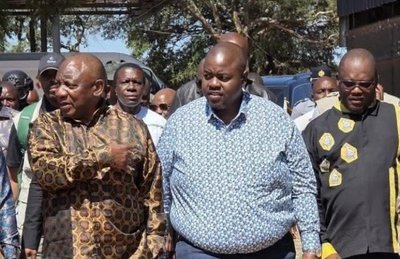
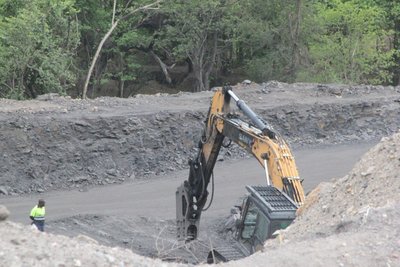
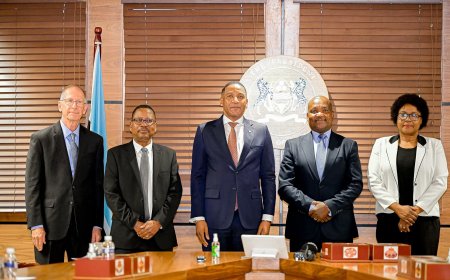
This imbalance creates a high-demand, high-return environment for hospitality operators, where occupancy rates are expected to approach full capacity, and ancillary services such as catering, transport and entertainment experience parallel growth. Infrastructure Development as a Catalyst The Independence celebrations have already triggered accelerated infrastructure development, particularly in road rehabilitation and venue construction. During an inter-ministerial tour last week, the Minister of Local Government and Public Works, Daniel Garwe, underscored the scale and urgency of preparations. “Our cut-off date in terms of works has been pegged at April 13 this year, before Independence, and we have been assured by the engineers that they will meet that target.
That is what is very important for us at this stage,” said Minister Garwe. “The Minister of Transport is here, the Local Government is here, the Minister of State is here. “We are expecting other ministers to be joining us to assess progress on the road rehabilitation programme, progress on the activities that have been done by the Minister of Local Government in terms of the stadium, in terms of the children’s party facilities, as well as other legacy projects that are going to be commissioned by His Excellency on the 18th of April.” These developments not only facilitate the event but also leave a lasting imprint on the province, enhancing accessibility and attractiveness for future tourism and investment. Visible Momentum and National Confidence Complementing these remarks, the Special Advisor to the President on Monitoring and Implementation of Government Programmes, Dr Joram Gumbo, highlighted the intensity of work underway and the confidence within Government. “We are inspecting the construction that is taking place, which is a very important section of the roads that lead to the Independence Place where independence celebrations are going to be held,” Dr Gumbo said. “What we have noticed is that people are on the ground; they are working very hard. I think as we have observed, by the time we come to hold our independence, a lot of work will be completed and people will be able to travel properly to the places. “There are hitches here and there, but I think they are not insurmountable.
So we expect that by the 13th of April, there will be quite a lot of improvement along this road.” Such assurances reinforce the perception of a coordinated national effort, instilling confidence among stakeholders, including tourism operators who stand to benefit directly from the influx. Hospitality Boom Dynamics: Lessons from Global and Regional Events Large-scale national and international gatherings have historically catalysed rapid growth in local hospitality sectors. Events such as the 2010 FIFA World Cup transformed cities like Johannesburg and Cape Town into global tourism hubs, with hotel occupancy rates reaching near saturation and significant investment flowing into accommodation infrastructure.
Similarly, the Expo 2020 Dubai generated massive demand for hotels and short-term rentals, encouraging innovation in hospitality services and the expansion of alternative accommodation models. Closer to home, Zimbabwe’s own agricultural shows and national events have consistently boosted local economies. The Maphisa Independence celebrations, however, represent a unique convergence of national significance and a rural setting, amplifying their economic impact.
Unlocking Community-Based Hospitality In anticipation of accommodation shortages, there is a compelling case for community participation. Enterprising hospitality operators can forge partnerships with local villagers willing to sublet their homesteads, thereby expanding capacity while directly benefiting rural households and popularising the concept of Village Hotels (Votels). This model, widely used in global tourism hotspots, promotes inclusive economic participation and cultural exchange.
Villagers can provide basic lodging, traditional meals and guided experiences, enriching the visitor experience while generating income at the grassroots level. Such initiatives require coordination, standardisation and basic training to ensure quality and safety, but they present a powerful mechanism for decentralised economic empowerment. The Symbolic Apex: Joshua Nkomo Legacy Projects Beyond immediate economic gains, the celebrations are anchored by enduring legacy projects, most notably the construction of a symbolic guest house and the facelift of the homestead of the late Father Zimbabwe and Vice President, Dr Joshua Mqabuko Nyongolo Nkomo, in St Joseph Village, Kezi.
This development carries profound historical and cultural significance, honouring the legacy of the late Vice President while positioning the area as a heritage tourism destination. The site is expected to attract visitors long after the celebrations, sustaining the hospitality boom and embedding Matabeleland South within Zimbabwe’s tourism circuit. Devolution in Action: A Policy That Delivers The rotational hosting of Independence celebrations epitomises devolution in practice.
By distributing national events across provinces, the Second Republic, under the stewardship of President Mnangagwa, ensures equitable development, infrastructure investment and economic stimulation. Each host province inherits tangible assets – upgraded roads, improved facilities and heightened visibility – that continue to yield benefits long after the event concludes. Matabeleland South now joins this trajectory, with Maphisa serving as a focal point for transformation.
Citizens are thus called upon to recognise and commend this policy direction, which translates national unity into shared prosperity. A Call to Action for Tourism Operators Tourism operators across Bulawayo, Gwanda, Esigodini, Mangwe and Insiza must seize this moment with strategic foresight. Maximising occupancy, enhancing service quality and investing in infrastructure upgrades will not only yield immediate profits but also position these areas for sustained growth.
Innovation, collaboration and community engagement will be key. From formal hotels to informal homestead accommodations, every available space represents an opportunity to contribute to and benefit from this historic convergence. A Province on the Rise The Independence celebrations in Maphisa encapsulate a powerful intersection of policy, history and economic opportunity. What begins as a national commemoration evolves into a catalyst for regional transformation, particularly within the hospitality sector.
As delegates converge in unprecedented numbers, Matabeleland South stands at the threshold of a tourism and infrastructure renaissance. Guided by the vision of President Mnangagwa and anchored in the principles of devolution, the province is not merely hosting a celebration; it is showcasing its potential to the nation and beyond. The post President’s devolution drive ignites hospitality boom in Maphisa appeared first on Zimbabwe Situation .
What's Your Reaction?
 Like
0
Like
0
 Dislike
0
Dislike
0
 Love
0
Love
0
 Funny
0
Funny
0
 Angry
0
Angry
0
 Sad
0
Sad
0
 Wow
0
Wow
0