










Residents Challenge Parliament Over Centralised Constitution Hearings
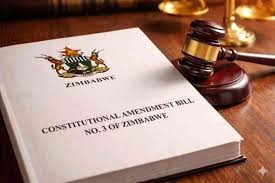
Residents from Mashonaland East and Masvingo have filed urgent High Court applications seeking to force Parliament to decentralise public hearings on the Constitution Amendment Bill, arguing the current centralised process excludes their participation.

Residents Challenge Parliament Over Centralised Constitution Hearings
Source: www.cite.org.zw
Residents from Mashonaland East and Masvingo provinces have taken legal action to challenge Parliament's approach to public consultations on proposed constitutional changes. They have filed urgent applications at the Harare and Masvingo High Courts, seeking an order to decentralise the hearings for the Constitution of Zimbabwe Amendment Bill (No. 3). The applications, filed on 23 and 24 March respectively, argue that the current plan does not allow for meaningful public input from their regions.
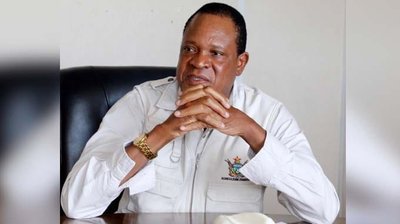
The residents, represented by the Zimbabwe Lawyers for Human Rights (ZLHR), have named senior state officials as respondents in their case. These include the Speaker of the National Assembly Jacob Mudenda, the President of the Senate Mabel Chinomona, the Minister of Justice Ziyambi Ziyambi, and President Emmerson Mnangagwa. The urgency of the application is underscored by the fact that the scheduled public hearings are set to run from 30 March to just 2 April, leaving little time for the court to intervene and alter the process.
This legal challenge emerges against a backdrop of heightened political tension concerning the relationship between the ruling party and the state. In a separate context, President Emmerson Mnangagwa has previously asserted in a formal ZANU-PF Politburo session that 'the party is supreme over government,' a statement that has raised concerns about constitutional order. The residents' court action can be seen as a direct test of the state's commitment to inclusive, constitutional processes over centralised party control.
The outcome of this case will have significant implications for civic participation in Zimbabwe. If the court rules in favour of the residents, it would mandate a more accessible and geographically dispersed consultation process, allowing a broader cross-section of citizens to contribute to the amendment of the nation's supreme law. A failure to decentralise the hearings risks rendering the constitutional amendment process illegitimate in the eyes of many, particularly those in provinces far from the capital.
While this domestic legal drama unfolds, a separate international legal matter highlights the cross-border reach of Zimbabwe's judicial system. In an unrelated case, a British national, Clayton Allen, has won a legal victory securing the right to enforce a UK judgment against Blessing Chinganga, a Zimbabwean citizen living in the UK. This demonstrates the functional aspects of Zimbabwe's legal framework in dealing with international claims, even as its domestic constitutional processes face scrutiny.
What's Your Reaction?
 Like
0
Like
0
 Dislike
0
Dislike
0
 Love
0
Love
0
 Funny
0
Funny
0
 Angry
0
Angry
0
 Sad
0
Sad
0
 Wow
0
Wow
0