









Scholar Argues Term Extension Bill Serves Zanu PF's Institutional Future, Not Just Mnangagwa
Political scientist Richard Mahomva contends that the proposed Constitutional Amendment Bill No. 3, which seeks to extend presidential terms, is a strategic move to secure Zanu PF's long-term survival, placing President Emmerson Mnangagwa in a difficult position between his...
Scholar Argues Term Extension Bill Serves Zanu PF's Institutional Future, Not Just Mnangagwa
Source: www.cite.org.zw
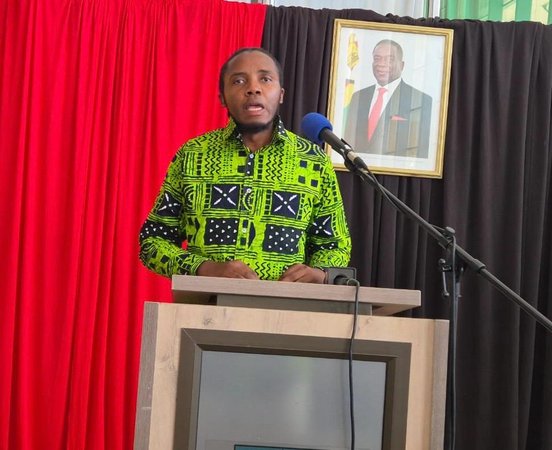
A prominent political science scholar has framed the controversial Constitutional Amendment Bill No. 3 as a mechanism for Zanu PF's institutional continuity, rather than a simple bid to extend President Emmerson Mnangagwa's tenure. Richard Mahomva presented this analysis during a public lecture at the National University of Science and Technology in Bulawayo last Friday, arguing that the bill's proposals must be viewed through the lens of party survival beyond any single individual. The bill, which originates from resolutions at Zanu PF's 2024 and 2025 National People's Conferences, seeks to change the electoral system, most notably by extending the presidential term from five to seven years.
Mahomva highlighted the complex predicament facing President Mnangagwa, who has publicly stated he will 'persuade the persuaders' not to push for him to remain in office beyond 2028, when the constitution currently mandates his retirement after two five-year terms. This personal position, according to the scholar, appears to conflict with the party's formal resolutions. Mahomva pointed to comments by Zanu PF Legal Secretary Paul Mangwana, who indicated that party decisions could override individual preferences and that 'external discipline' could be applied to members who act contrary to party resolutions.
Drawing a historical parallel, Mahomva cited former President Robert Mugabe's 1977 distinction between 'internal' and 'external' discipline within the nationalist movement. He suggested Mnangagwa's declared intention represents an exercise of internal discipline, but it risks clashing with the party's external discipline if it contradicts a formal institutional resolution. 'President Emmerson Mnangagwa finds himself in a serious predicament,' Mahomva said, noting that as a party member, he is governed by its rules and cannot act solely according to his own wishes.
The scholar's lecture comes amid active national debate on the amendment bill, with significant public opposition manifesting. Zimbabweans in the United Kingdom, for instance, are set to stage a protest against the bill in London on April 18. The proposed changes touch the core of Zimbabwe's governance structure, with the bill aiming to alter a constitution that also sets other qualifications, such as the requirement that a presidential candidate must be at least forty years old.
Ultimately, Mahomva's analysis posits that the drive for Amendment Bill No. 3 is a 'more complex case of preserving the institutional existence of the party' than catering to an individual's ambition. He concluded that if Zanu PF formally adopts a resolution to extend the presidential term, any office holder would be expected to comply, as the institution's will is designed to supersede personal preference, a dynamic that places the current president squarely between what he has called 'a hard place and a rock.'
What's Your Reaction?
 Like
0
Like
0
 Dislike
0
Dislike
0
 Love
0
Love
0
 Funny
0
Funny
0
 Angry
0
Angry
0
 Sad
0
Sad
0
 Wow
0
Wow
0