







War veterans demand repeal of MOPA, say law undermines constitutional rights
A faction of the Zimbabwe National Liberation War Veterans Association (ZNLWVA) has called for the immediate repeal of the Maintenance of Peace and Order Act (MOPA), arguing that the law has strayed from its original purpose and is now u...

War veterans demand repeal of MOPA, say law undermines constitutional rights
Source: www.cite.org.zw
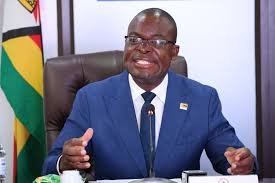
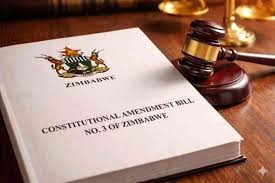
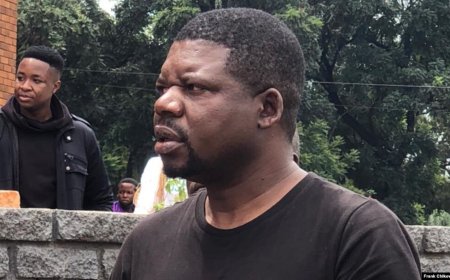
A faction of the Zimbabwe National Liberation War Veterans Association (ZNLWVA) has called for the immediate repeal of the Maintenance of Peace and Order Act (MOPA), arguing that the law has strayed from its original purpose and is now used to undermine citizens’ constitutional rights. The war veterans association said MOPA , introduced in November 2019 to replace the widely criticised Public Order and Security Act (POSA), has largely retained the repressive elements it was meant to reform. While the law was presented as a progressive shift toward safeguarding public order within a constitutional framework, war veterans say its implementation tells a different story. “MOPA, in its current form and application, restricts freedoms guaranteed under the Constitution, including the rights to assembly, association and expression,” said ZNLWA faction chairperson, Ethan Mathibela. “What is presented as a system of notification has, in practice, become a system of permission.” The war veterans’ call comes amid growing concerns that the State has restricted public discussion of the Constitutional Amendment Bill No. 3, limiting gatherings and citizens’ ability to freely express their views, leaving people to question whether the consultation process was conducted fairly, openly and inclusively.
Observers say there has been a double standard, with Zanu PF officials and supporters reportedly allowed to hold gatherings while opposition supporters face disruption or attacks when attempting similar meetings. These concerns are rooted in a broader pattern of shrinking civic space and mounting pressure on dissenting voices, increasingly evident in recent weeks as critics of the Bill report intimidation and arrests. Mathibela said the developments around MOPA contradict the democratic values Zimbabwe was founded on, warning that the country risks normalising state control over basic civic freedoms. “We did not fight to replace one form of control with another,” he said. “The Constitution is clear.
Citizens have the right to gather, to speak and to participate in the affairs of their country without undue interference.” Mathibela said war veterans are concerned by the wide discretionary power granted to law enforcement under MOPA, which has led to selective and inconsistent application of the law. Although the Act requires organisers of public gatherings to notify police in advance, seven days for demonstrations and five days for meetings, the association argues that authorities have effectively converted this into a permission-based system. This has enabled police to prohibit, reroute, or restrict gatherings on grounds that are often broadly defined, including anticipated “public disorder.” The law also places restrictions on gatherings near key institutions, including Parliament and courts, while criminalising non-compliance with notification procedures. “These provisions, taken together, create a chilling effect on citizen participation,” the association said. “People are increasingly reluctant to exercise their rights for fear of arrest or harassment.” MOPA replaced POSA amid widespread hope that Zimbabwe was moving away from heavy-handed public order laws that had long been used to suppress dissent.
However, critics argue MOPA has maintained much of the same framework, particularly in how it regulates freedom of assembly and expression. For the war veterans, this continuity is unacceptable. “What we are witnessing is not reform, but continuity under a different name,” Mathibela said. “The spirit of the Constitution is undermined through the application of laws that limit, rather than protect, citizen freedoms.” Mathibela said war vets were now urging the government and Parliament to take decisive action by repealing MOPA and replacing it with legislation that fully aligns with constitutional principles. “One, repeal the Maintenance of Peace and Order Act. “Two, initiate an inclusive process to draft a new, rights-based Public Order Management law. Three, Make sure that any replacement legislation aligns fully with the Constitution.” Mathibela said maintaining public order is necessary but must be done within the limits of the Constitution. “Laws that regulate public gatherings must be fair, proportionate, and applied equally to all citizens,” he said.
The senior war vet stressed that the call to repeal MOPA is not politically motivated, but rooted in the need to protect constitutional democracy. “This issue affects all Zimbabweans, workers, students, churches, vendors, and community organisations,” the association said. “It is not a partisan issue, but a constitutional one.” As part of its next steps, the association said it will engage citizens, civil society organisations, and other stakeholders to build a broad-based platform advocating for constitutional freedoms and accountable public order management. “The call to repeal MOPA is a call to uphold the Constitution and restore balance between authority and freedom,” Mathibela said. “Zimbabwe’s democratic framework must be protected and strengthened. Laws that govern public order must serve the people, not limit them.”
What's Your Reaction?
 Like
0
Like
0
 Dislike
0
Dislike
0
 Love
0
Love
0
 Funny
0
Funny
0
 Angry
0
Angry
0
 Sad
0
Sad
0
 Wow
0
Wow
0