




Zimbabwe’s Mnangagwa Faces Calls to Extend Term Despite Electoral Rejection in 2018 and 2023
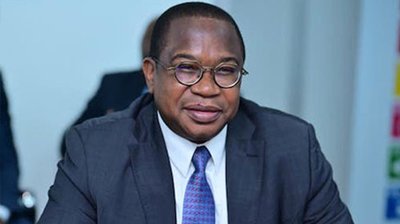
President Emmerson Mnangagwa’s loyalists are pushing for a constitutional amendment to extend his tenure beyond 2028, despite evidence from two elections showing significant voter rejection of the president compared to his party’s parliamentary candidates.
Zimbabwe’s Mnangagwa Faces Calls to Extend Term Despite Electoral Rejection in 2018 and 2023
Source: www.zimbabwesituation.com
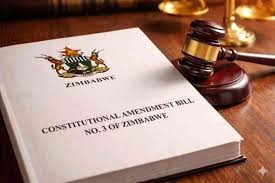
President Emmerson Mnangagwa and his loyalists are advocating for a constitutional amendment that would extend his time in office beyond the current 2028 deadline. According to Zimbabwe’s constitution, Mnangagwa is expected to retire after serving two five-year terms, concluding in 2028. However, recent political maneuvers, including the so-called “Resolution No. 1” and the Constitutional Amendment (No. 3) Bill, seek to alter this timeline, ostensibly reflecting popular demand for the president to remain in power.
This narrative of widespread public support is challenged by election data from the 2018 and 2023 harmonized elections. In 2018, Mnangagwa narrowly avoided a presidential run-off by securing 2,461,745 votes, while ZANU PF candidates for the National Assembly collectively garnered approximately 2,477,708 votes. This discrepancy indicates that tens of thousands of voters who supported ZANU PF’s local parliamentary candidates deliberately withheld their endorsement from Mnangagwa himself.
The pattern persisted in the 2023 elections, where despite vigorous campaigning under the “ED Pfee” slogan, Mnangagwa received 2,350,711 votes, trailing behind the 2,501,475 votes amassed by ZANU PF parliamentary candidates. This means over 160,000 voters again opted for ZANU PF representatives but rejected the president at the ballot box. Political analyst Tendai Ruben Mbofana highlights this “split-voting” as a clear and deliberate political statement, reflecting a deep-seated distrust of Mnangagwa even among the ruling party’s base.
These figures raise critical questions about the legitimacy of claims that the push to extend Mnangagwa’s term is driven by popular demand. If the electorate truly supported the president’s leadership and development agenda, the vote counts would logically align or favor him over his party’s MPs. Instead, the opposite is evident: the president’s vote tally consistently lags behind that of his party’s parliamentary candidates, signaling a rejection of his individual leadership despite continued support for ZANU PF at the local level.
The call for constitutional change to allow Mnangagwa to remain in power beyond 2028 thus appears disconnected from the electoral reality. It suggests an attempt to override the will of the voters who, in two consecutive elections, have expressed reservations about the president’s leadership. This disconnect fuels debate about the integrity of Zimbabwe’s democratic processes and the respect for constitutional limits.
While the political discourse around Mnangagwa’s potential term extension intensifies, the broader implications for Zimbabwe’s governance and constitutional order remain uncertain. The situation underscores the tension between political ambition and popular mandate, a dynamic that will continue to shape Zimbabwe’s political landscape in the coming years.
What's Your Reaction?
 Like
0
Like
0
 Dislike
0
Dislike
0
 Love
0
Love
0
 Funny
0
Funny
0
 Angry
0
Angry
0
 Sad
0
Sad
0
 Wow
0
Wow
0